Legacy
Maybe legacy isn't something we leave behind when our life ends. Maybe we're already living it, in what we teach, what we build, and what we carry forward.
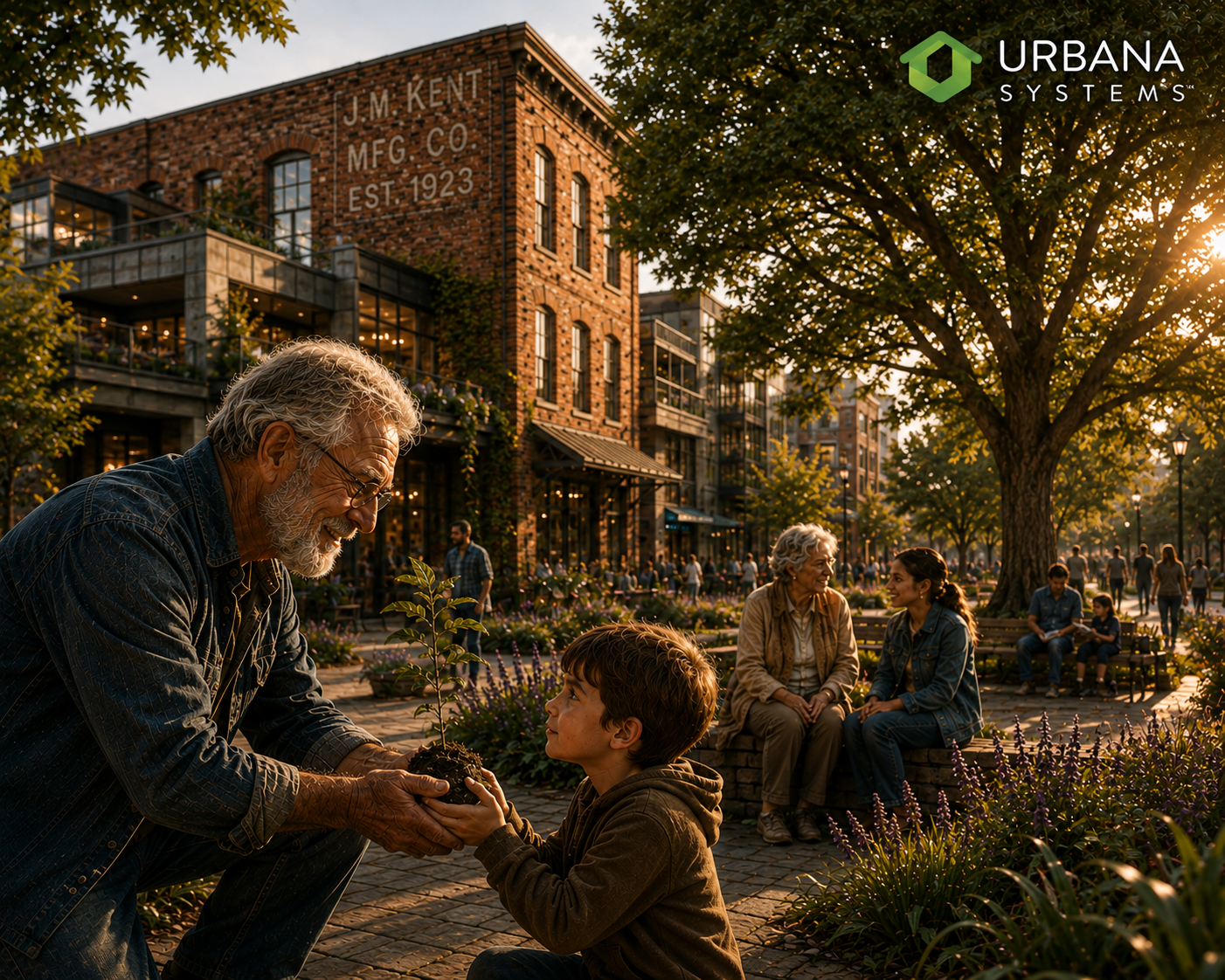
We tend to talk about legacy as though it belongs to the future.
Someday.
Someday we'll think about what we leave behind.
A business.
A building.
Money.
A name people remember.
Something that says:
I was here.
There's nothing wrong with any of those things.
But maybe we've been looking at legacy from the wrong direction.
Maybe legacy doesn't begin when our life ends.
Maybe legacy is being created while we're living it.
Right now.
In what we teach.
What we build.
How we love.
The opportunities we create.
The way we treat people.
The things we choose to carry forward.
Maybe we don't leave a legacy.
Maybe we live one.
Because all of us are already carrying pieces of people who came before us.
A parent.
A teacher.
A mentor.
A friend.
Someone who believed in us.
Someone who challenged us.
Someone who simply lived in a way that changed how we wanted to live.
Some of them know how much they influenced us.
Most probably don't.
And somehow a piece of them became a piece of us.
That's legacy.
I think about my father.
He had his own life.
His own values.
Perhaps even his own idea of what his legacy would be.
But I have my version of his legacy too.
So do my brothers.
So do his grandchildren.
And none of them are exactly the same.
Because we each experienced him differently.
We remember different moments.
We absorbed different lessons.
We carry different pieces of him forward.
Which raises an interesting question.
Who actually decides what our legacy is?
Maybe we don't.
At least not entirely.
We decide how we live.
What we value.
What we teach.
What we stand for.
But other people decide what mattered to them.
What they remember.
What they carry.
And eventually, what they pass forward.
We can shape our legacy.
But we don't completely own it.
Legacy moves between people.
And every time it moves, it changes a little.
We inherit something.
We interpret it.
We add ourselves to it.
Then we pass some version of it forward.
We inherit.
We add.
We pass it forward.
Maybe legacy isn't meant to remain exactly as we created it.
Maybe the fact that it changes is evidence that it's still alive.
Something we were given becomes something we give.
And eventually, something that began years ago may reach someone the person who started it could never have imagined.
Maybe nobody even remembers where it began.
Maybe that means it worked.
Because legacy was never about having our name attached to something.
If your life has touched another life, some version of your legacy already exists.
Legacy isn't measured by how long we've lived.
It's shaped by how we live.
So maybe the question isn't:
How do I want to be remembered?
Maybe it's:
How am I living today?
What am I teaching?
What am I making possible?
What am I carrying forward?
And am I creating a better starting point for whoever comes next?
I've spent much of my life working with buildings.
Buildings give us an unusually tangible way to think about legacy because they can stand much longer than we will.
But I've never believed the building itself is the most important part.
It's what becomes possible because the building exists.
A family owns a home.
A business gets started.
Someone gets an opportunity.
Children grow up.
Relationships form.
Community takes root.
Lives unfold.
And eventually those lives touch others in ways nobody could have planned.
That's something we think about deeply at Urbana Systems.
We take buildings that have already lived one life and help give them another.
Not as monuments to us.
As places of possibility for the people who come next.
We can create places for ownership.
For businesses.
For health.
For connection.
For community.
But eventually, the people take over.
They make it theirs.
We may shape the place.
But people create its legacy.
And there's something fitting about giving an old building another life.
Because we're rarely beginning at the beginning.
Someone imagined it before us.
Someone built it.
Lives unfolded there.
It already has a story.
Our job isn't to erase it.
We inherit it.
We add something new.
We give it another purpose.
And eventually someone else will inherit what we changed.
Just like life.
We inherit.
We add.
We pass it forward.
Nobody owns the whole story.
We simply get our chapter.
And maybe that's what makes legacy so powerful.
It's not static.
It's not waiting for someday.
Legacy is alive.
Being created now.
Changed now.
Passed forward now.
We don't completely know where it will go.
Maybe we're not supposed to.
Our responsibility may simply be to make our chapter worth carrying forward.
To take what we've been given.
Add what we can.
And give whoever comes next a better place to begin.
Maybe one day our names disappear from the story.
Maybe even the buildings do.
But something we helped create may still be moving.
A value.
An opportunity.
A lesson.
A relationship.
A person who sees something differently because somewhere along the way, our life intersected theirs.
Maybe the question was never:
What will I leave behind?
Maybe it's:
What am I creating today that someone else can carry tomorrow?
Because perhaps legacy isn't about being remembered.
Maybe it's about giving the future something worth carrying forward.
Written by: Larry Greene, Chief Real Estate Development Officer, US; Urbana Systems. CEO, Gen3 Development.